UX Case Study · Amazon Singapore · BNPL Checkout
Launching Amazon Singapore's First BNPL Checkout Experience
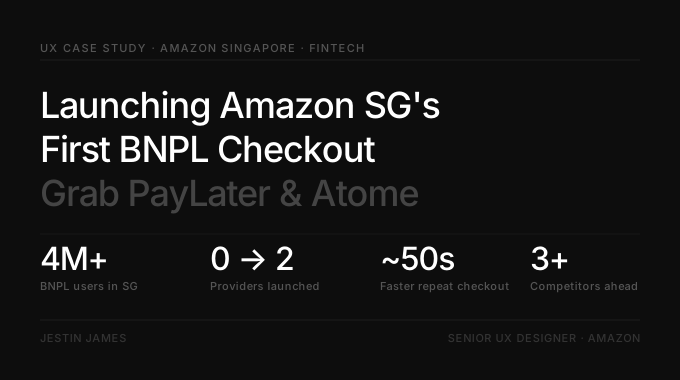
Amazon Singapore had no BNPL offering at all — while Shopee, Lazada, and every major competitor had already normalised instalment payments for millions of Southeast Asian shoppers.
In one of Southeast Asia's fastest-growing BNPL markets, Amazon SG was the only major e-commerce platform without a native Buy Now Pay Later option at checkout. Grab PayLater and Atome had built significant user bases — over 4 million combined active accounts in Singapore alone — and competitors were already using BNPL as a conversion lever for higher-value purchases. Every day without it was a competitive gap: customers who wanted to pay in instalments simply went elsewhere.
This wasn't a discoverability problem or a UX refinement — it was a missing capability. The challenge was to design Amazon SG's first BNPL checkout experience from scratch: one that felt native to Amazon's checkout, integrated cleanly with two external fintech partners, and removed enough friction to actually shift behaviour.
Who, what, and why Singapore
Amazon Singapore, launching its first BNPL integration in partnership with Grab PayLater and Atome — two of the most widely used instalment payment providers in Southeast Asia, with a combined user base of over 4 million active accounts in Singapore alone.
Singapore was the right market to launch first. It is one of Southeast Asia's most digitally mature economies and a leading indicator for regional BNPL behaviour. Getting this right in SG created a scalable integration blueprint for future markets — making this more than a single-country feature.
Amazon SG had no BNPL. Its competitors did — and it showed.
By 2023, BNPL had become table stakes for e-commerce in Southeast Asia. Shopee had deeply integrated SPayLater. Lazada offered instalment options at the product level. Grab and Atome had become household names, with millions of Singaporeans actively choosing instalment payments for purchases above SGD 100. The demand was there. Amazon just wasn't in the conversation.
The absence created a measurable competitive disadvantage, particularly for higher-value categories — electronics, home goods, and fashion — where affordability framing directly influences purchase decisions. Customers who arrived at Amazon's checkout wanting to pay in instalments had nowhere to go. They either paid full price, abandoned, or bought the same product elsewhere.
The central design challenge was not just matching competitors — it was the opportunity to launch better than them. Competitive benchmarking revealed that even on Shopee and Lazada, BNPL checkout required a full redirect, OTP entry, and provider confirmation on every transaction. We had the chance to get this right from day one, not fix it later.
Understanding the market and the failure modes before designing anything
Launching a new payment capability on Amazon required understanding both the opportunity and the risks — particularly the UX failure patterns already visible in competitor flows. Research ran across four workstreams.
- BNPL checkout flows across Shopee, Lazada, Grab's native app, and Atome merchant integrations
- Documented all friction and failure points in competitor redirect-auth models
- Identified the repeat-authentication loop as the single most common drop-off driver
- Singapore-based Amazon shoppers who actively used BNPL with other platforms
- Focused on mental models, trust perceptions, and friction moments
- One consistent theme surfaced across every session
- Deep-dive sessions with Grab and Atome integration teams on token models, security constraints, and re-auth triggers
- Reviewed analogous Amazon BNPL integrations in other markets for benchmarks
- Mapped all technical edge cases before wireframing
The key insight: Customers were comfortable with authenticating once. What they refused to accept was being asked to do it again on every purchase. In every user interview, some version of the same statement appeared: "I've linked my account with Grab already — why do I have to do it again?" Customers had earned a faster path. The experience just hadn't been designed to give them one.
One-time account linking — not the obvious choice, but the right one
With research pointing clearly at repeat-authentication friction as the core UX risk, three integration approaches were evaluated before converging on a direction.
| Option | Description | Why considered | Decision |
|---|---|---|---|
| A — Standard redirect per transaction | Full provider redirect + OTP on every purchase. The industry default. | Fastest to build; matches competitor baseline; lowest integration risk | Rejected — launches with the known failure mode baked in. Builds technical debt from day one. |
| B — Native BNPL inside Amazon checkout | Full in-house integration, no provider redirect at all | Maximum control; best possible checkout speed | Rejected — requires deep provider API ownership, compliance review, and timeline not feasible for v1 |
| C — One-time account linking Chosen | Customer authenticates with provider once. Token stored. Future purchases bypass redirect. | Directly addresses the research insight; builds on existing provider security models without requiring full ownership | ✓ Differentiated from competitors at launch. Scalable to new providers. Addresses root cause, not symptoms. |
Option C required close collaboration with both provider integration teams on token architecture, session expiry handling, and re-authentication triggers — for example, after account inactivity, or for transactions above a defined threshold. The design work wasn't just screens; it was defining the experience contract between Amazon's checkout and two external fintech systems.
From zero to a differentiated checkout experience
The design moved through four distinct phases — each building on validated decisions from the last, with engineering and partner teams embedded throughout.
The three key flows
BNPL selection → Account verification with mobile number & OTP → provider authentication (one time) → linked state persisted to profile
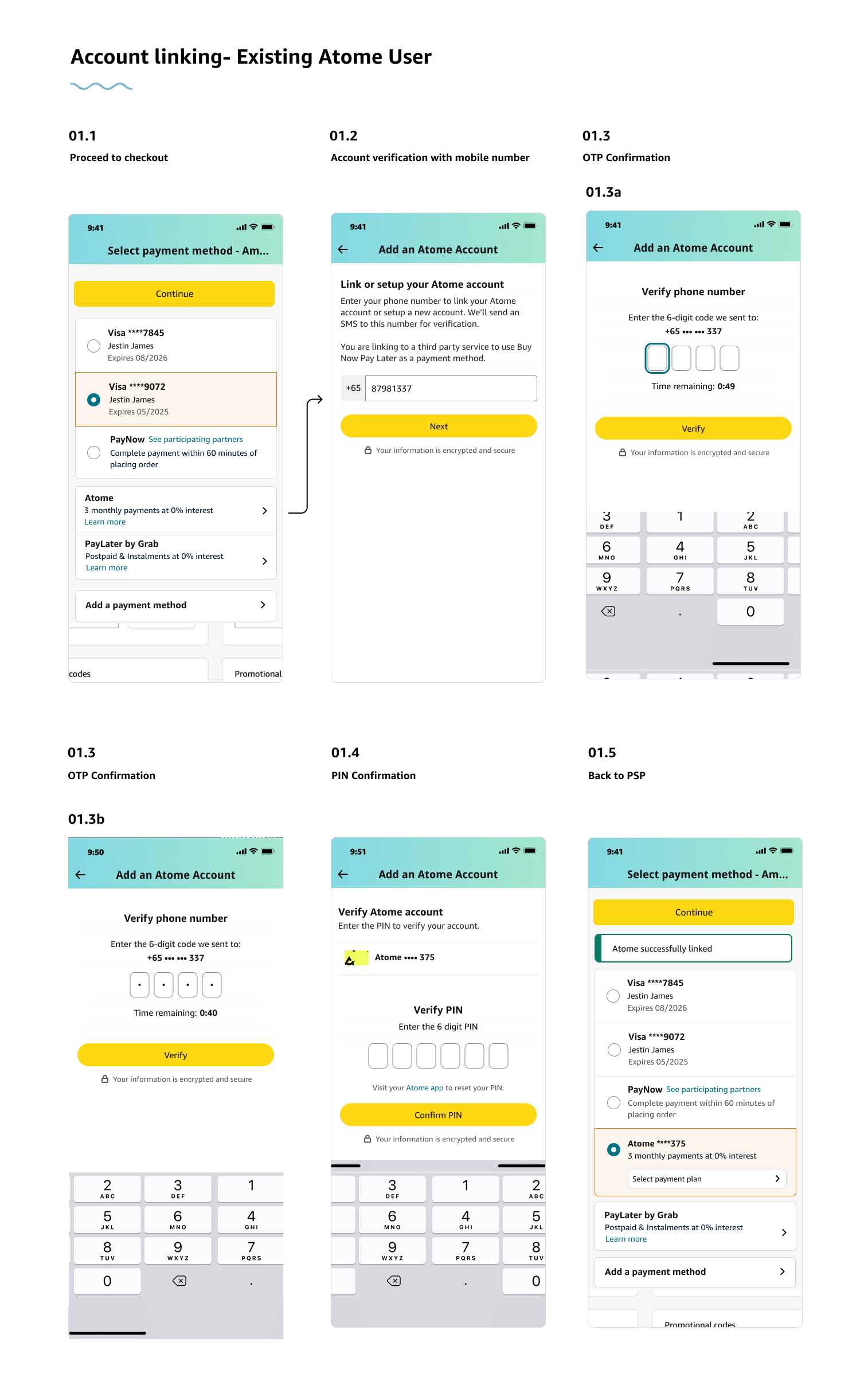
First-time flow — BNPL selection and one-time account linking with Atome / Grab PayLater
BNPL selection → linked account shown → one-tap confirm → done. No redirect. No OTP. Estimated 40–50 seconds faster than the industry standard.
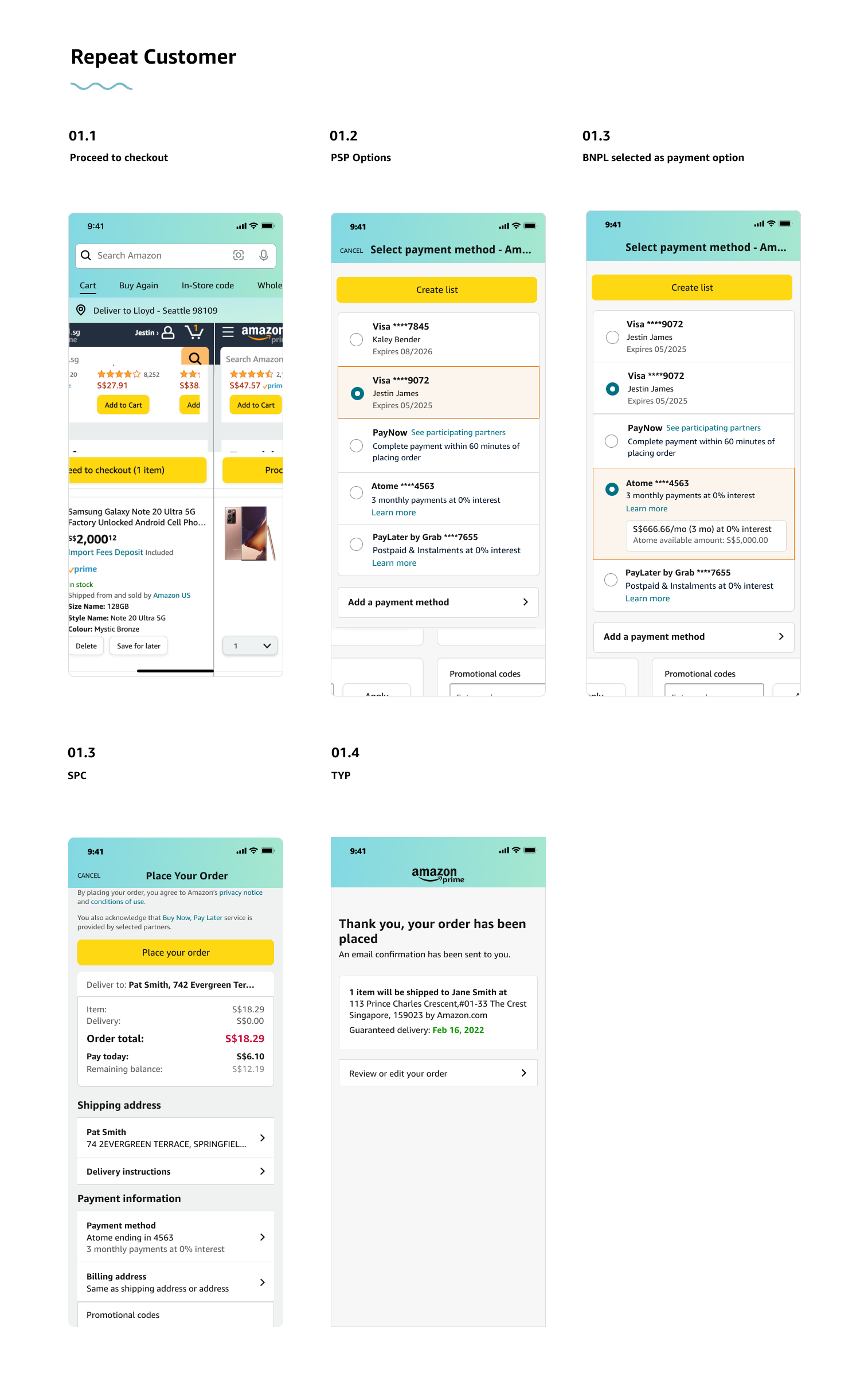
Returning flow — linked account shown at checkout, one-tap confirm, no re-authentication
New customers without an existing Atome account are guided through registration inline — entering their details, verifying identity, and completing account setup before returning to the Amazon checkout with their account linked and ready.
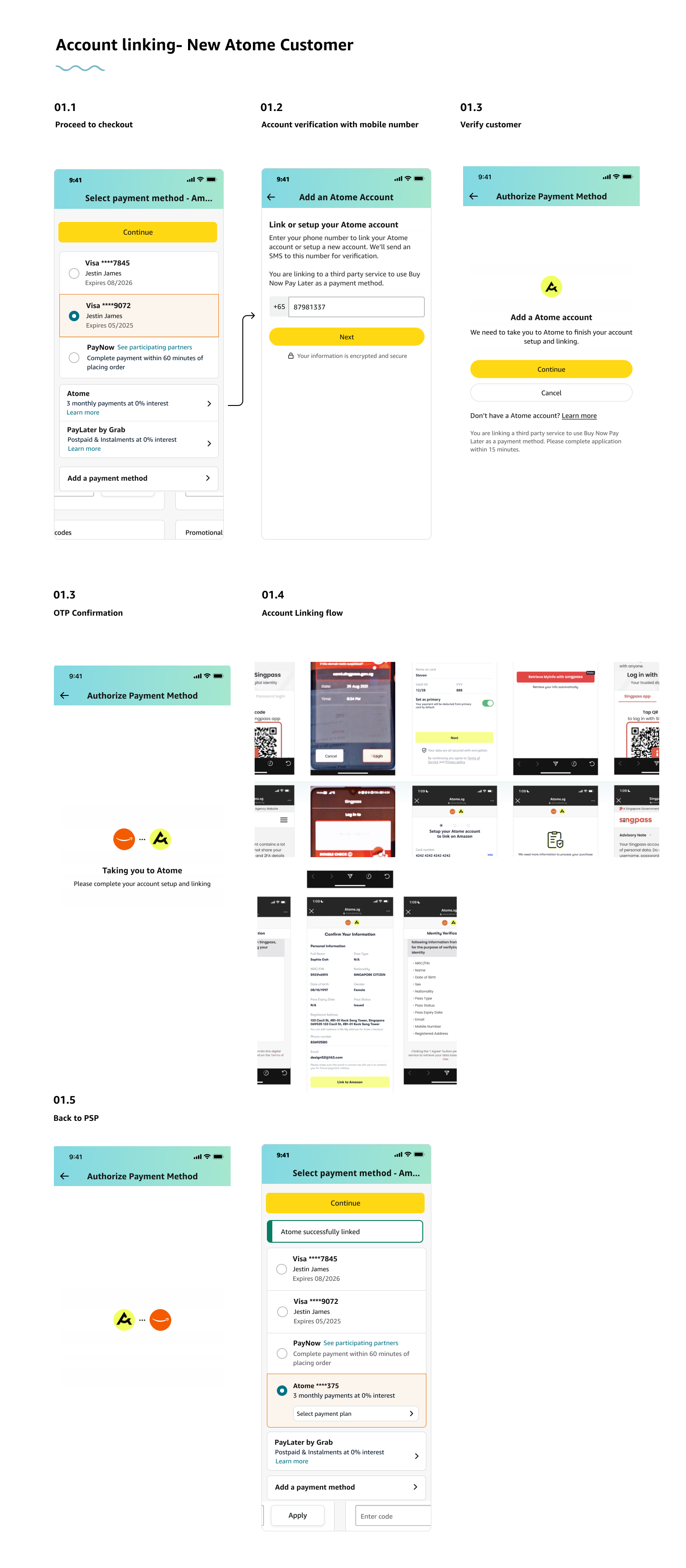
New customer flow — Atome account registration and linking during checkout
Closing the competitive gap — and launching a framework
Amazon SG launched its first BNPL checkout experience with support for both Grab PayLater and Atome — entering a competitive space that had previously been a gap, with a differentiated authentication model that no direct competitor had at the time of launch.
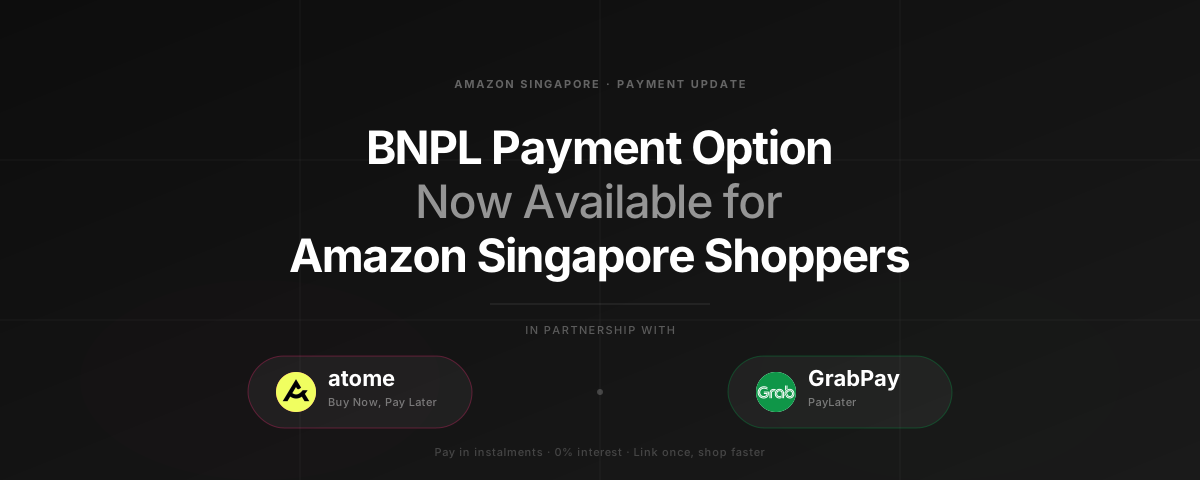
Post-launch — BNPL in Amazon SG checkout with Grab PayLater and Atome
Estimated time saved per repeat BNPL transaction vs. industry-standard redirect-auth model
Grab PayLater and Atome — covering the two most widely used BNPL options in Singapore
The linking architecture was designed to onboard future BNPL providers across SEA markets without rebuilding the core flow
Qualitative signals
- One-time linking drove meaningfully higher repeat BNPL usage — customers who linked once returned at significantly higher rates than benchmark single-session BNPL flows
- Customer feedback highlighted speed and simplicity as the primary differentiators vs. BNPL experiences on other platforms
- Both Grab and Atome integration teams validated the linked-account model as a preferred integration pattern — influencing their approach to future merchant partnerships
- The project closed a measurable competitive capability gap and positioned Amazon SG to compete on affordability for the first time